

Relationship marketing starts with trust
Marketers have more ways than ever to reach their audiences, but attention and trust are harder to earn. People expect brands to understand their needs, respect their preferences, and deliver experiences that feel connected across every interaction. That’s where relationship marketing comes in.
Relationship marketing is about building long-term customer connections through value, relevance, and trust. Instead of relying on one-off campaigns or disconnected data points, it helps marketers create better experiences across the full customer journey, from first interaction to long-term loyalty.
In this guide, we’ll explore the core stages of relationship marketing, including acquisition and enrichment, engagement, personalization, and loyalty and retention. You’ll also find practical ideas for building stronger customer relationships at every stage.
What is relationship marketing?
Marketers are facing challenges that make it harder to understand, reach, and retain customers. Third-party data is becoming less reliable, customer data is often fragmented or difficult to activate, and personalizing across multiple channels can feel complicated without the right strategy and systems in place. But with relationship marketing, marketers can start to address these issues one by one.
The foundation of relationship marketing is the connection between the brand and the customer. To drive long-term customer lifetime value (CLV), marketers need to build relationships that create ongoing value for both sides. That means focusing on four key principles:
- Foster a continuous value exchange with the customer
- Engage customers at the right time
- Unify loyalty and marketing
- Build a more complete understanding of each customer
Relationship marketing follows the customer journey from first interaction to long-term loyalty. For some organizations, that journey might mean turning first-time buyers into loyal customers. For others, like colleges and universities, higher ed relationship marketing can help keep students, alumni, donors, and campus communities engaged over time.
Relationship marketing Stage 1
Acquisition and enrichment
No matter what business you’re in, and no matter how you derive your revenue streams, you need to turn an unknown contact into someone you can understand, support, and engage over time. This is the first step in building a relationship: getting to know each other.
Even before someone becomes a customer, you have an opportunity to start building trust. That begins with a clear value exchange: asking for information your audience chooses to share, then using it to deliver something meaningful in return. Surveys, preference centers, sign-up forms, and other interactive experiences can help you collect zero-party data alongside basic contact details. From there, you can map that information to your customer database, CRM, or customer data platform (CDP) and begin building a more complete profile for each person who engages with your brand.
You can also enrich customer profiles with additional data sources, such as purchase history, app engagement, loyalty activity, or permission-based browsing behavior, as long as that data is collected with appropriate consent, disclosed in your privacy policy, and used in line with applicable laws and regulations. This helps you grow your audience while building the foundation for more personal offers, messages, and experiences later in the journey.
This approach can also help reduce over-reliance on paid media. Instead of repeatedly paying to reach the same audiences, you can invite people into owned channels like email, SMS, app, and website messaging, then continue building the relationship over time. But first, you have to earn the right to stay in touch.
Value exchange
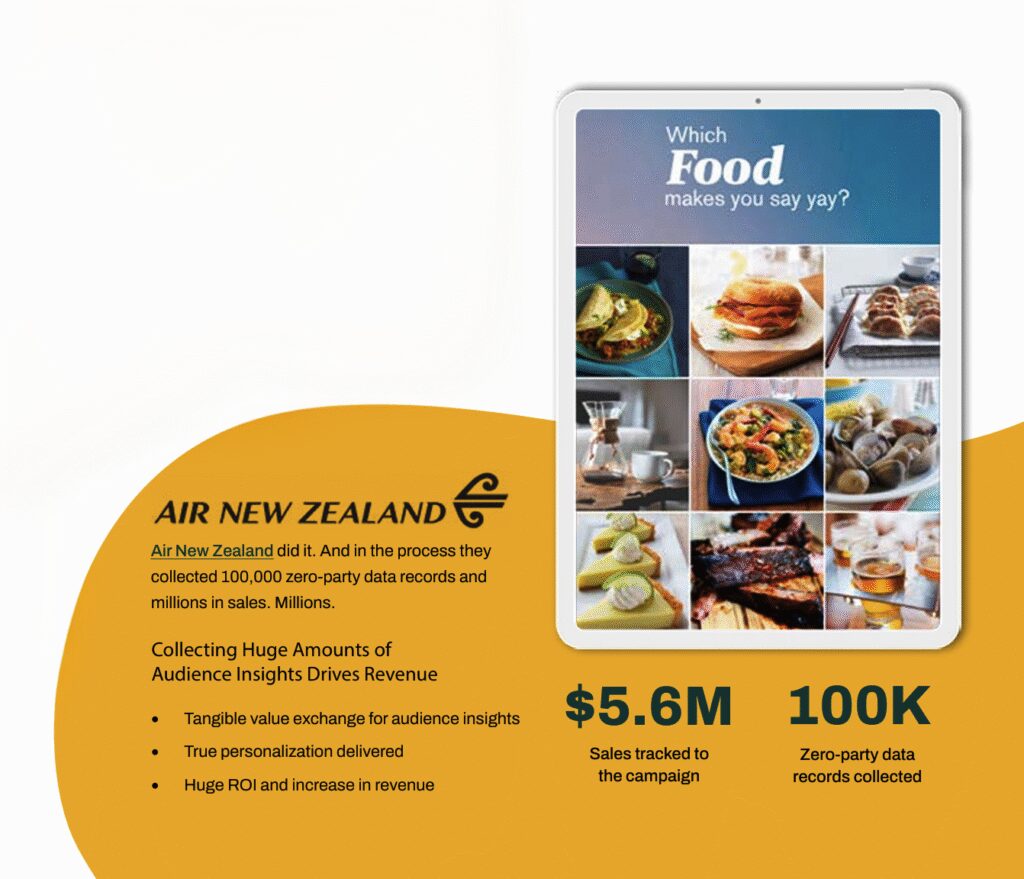
A value exchange is simple: your audience shares information, and your brand provides something worthwhile in return. That value might be a discount, early access, a more personalized recommendation, loyalty rewards, helpful content, or a better overall experience. The key is transparency. People are more likely to share information when they understand what they’ll receive and trust that you’ll use their data responsibly.
Purchased data and unclear tracking practices may give you more records, but they rarely create the trust or accuracy needed for long-term customer relationships. Zero-party data, or information customers intentionally share with your brand, gives you a stronger foundation for personalization because it comes directly from the person you’re trying to serve.
When the value exchange is clear, both sides benefit. Customers receive more meaningful experiences, and marketers gain the insight they need to communicate with greater care and precision.
Data enrichment
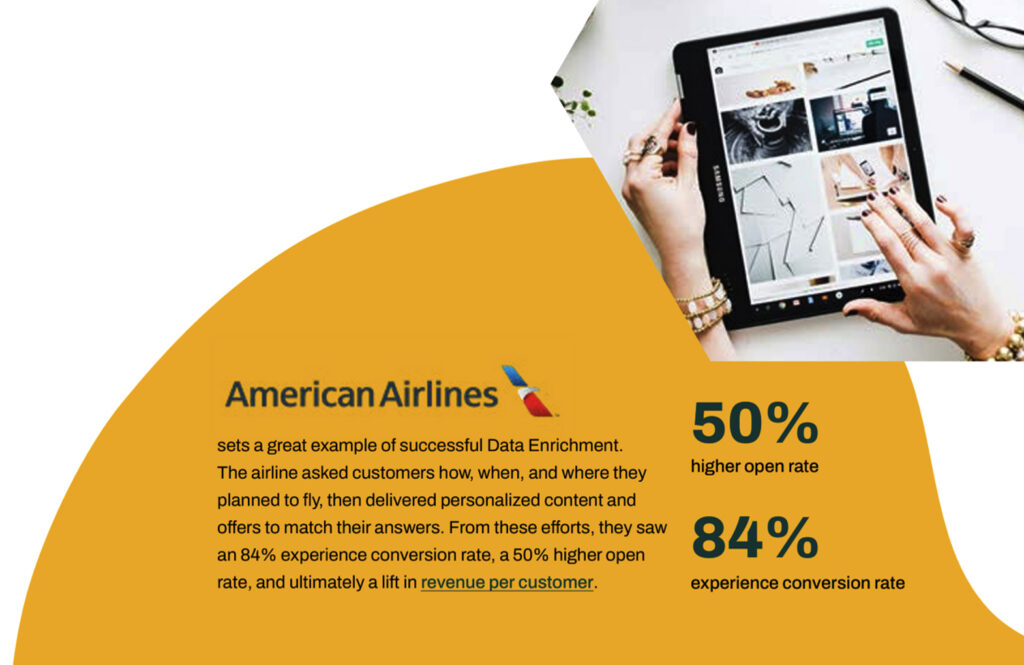
Once someone has shared their basic information, data enrichment helps you build a clearer understanding of their needs, preferences, and behaviors over time. A name and email address are a starting point, not a full customer profile. As customers continue to engage with your brand, you can learn more through purchases, preferences, survey responses, loyalty activity, email engagement, and other permission-based interactions. Data enrichment should be ongoing. Customer needs change, preferences shift, and behaviors evolve. By continuing to learn from each interaction, you can create messages and experiences that feel more connected to where each customer is now.
Start with these ideas for acquisition and enrichment
Use your acquisition efforts to offer a clear value exchange to new audiences. Instead of focusing only on ads that drive directly to purchase, invite people to share their preferences, interests, or needs in exchange for something valuable. That could be a sweepstakes, discount, early access, helpful guide, product recommendation, or other experience that complements your brand. You can also invite existing subscribers to answer a few preference questions in exchange for a better, more personalized experience. The goal is to collect information people choose to share, then use it to make future messages more helpful and relevant.
Relationship marketing Stage 2
Engagement
Once you’ve made contact and started learning about your audience, the next step is engaging them across the channels they use most. Owned channels might include email, SMS, website messaging, apps, or direct mail.
The key is consistency. Instead of sending disconnected campaigns, use customer data and real-time signals to deliver messages that feel connected across channels and aligned with each person’s journey. Dynamic segments, triggered journeys, and strong deliverability practices all help make your engagement strategy more effective. When your data, messaging, and reporting work together, it becomes easier to understand your audience and improve each campaign over time.
The bottom line? To drive valuable customer engagement, brands need to deliver a consistent experience across channels.
Messaging at scale
Scaling your messaging strategy does not mean sending more emails to more people. It means sending the right messages more consistently, with the right segmentation, timing, and reporting in place.
Email remains a powerful channel for building customer relationships, and SMS can complement email when it is used thoughtfully. Together, these channels can help teams deliver timely campaigns, automated journeys, and triggered messages based on customer behavior.
As your audience grows, your messaging tools need to grow with you. Strong segmentation, automation, deliverability, and reporting make it easier to understand what is working and identify new opportunities for future campaigns.
Cross-channel marketing
Cross-channel marketing helps ensure each customer interaction builds on the last. When email, SMS, website, app, and loyalty experiences are disconnected, customers can receive messages that feel repetitive, inconsistent, or out of step with what they’ve already done. A connected cross-channel strategy helps marketers coordinate messages across touchpoints. Depending on your industry, that might mean welcoming new gym members, nurturing prospects, recognizing student milestones, rewarding traveler loyalty, or reengaging nonprofit donors who have gone quiet.
The goal is not to be everywhere at once. It’s to create a more consistent experience wherever your audience chooses to engage.
Start with these ideas for engagement
Use A/B testing across email and SMS to learn which messages, timing, and offers resonate most with your audience. Determine if browsing behavior can trigger abandoned cart, win-back, or other journeys across channels. Use intelligent segments for mass messaging and track the results so you can use those insights to inform more personalized campaigns over time. Integrate more mobile messaging and data collection into your communications and transactions.
Relationship marketing Stage 3
Personalization
Once you’ve built your database, enriched customer profiles, and established a consistent messaging strategy, you can begin using that data to create more personalized experiences. Personalization can take many forms, from triggered emails and dynamic content to product recommendations, loyalty offers, website experiences, and journey-based messaging. The goal is to respond to customer signals with content, timing, and offers that feel more connected to their needs.
As your strategy matures, AI and machine learning can help identify patterns, predict likely actions, and recommend next steps. But personalization still starts with good data, clear goals, and a strong understanding of your audience.
Just-in-time marketing
Just-in-time marketing is about responding to customer signals in the moments when they matter most. A shopper comparing products, a donor returning to a campaign page, or a subscriber revisiting a resource may all be showing intent. The right message delivered at the right time can nudge them to take the next step.
These just-in-time marketing moments work best when they’re grounded in context. Brands can use permission-based behavioral signals, purchase history, preferences, and engagement data to deliver timely messages, offers, or reminders across email, SMS, website, app, or loyalty channels.
Intelligent marketing
Intelligent marketing uses customer data, analytics, AI, and machine learning to help marketers make more informed decisions. Instead of manually identifying every audience or next-best offer, teams can use predictive insights to better understand customer behavior and prioritize the messages most likely to resonate. These tools can support audience identification, recommendations, offer optimization, and journey orchestration. The result is a more efficient marketing strategy that helps teams act on customer insights with greater speed and confidence.
Start with these ideas for personalization
Look for moments where customer behavior can guide a more personal message. Instead of sending the same birthday email every year, consider using recent browsing behavior, purchase history, loyalty activity, or stated preferences to shape the content or offer. You can also use post-purchase surveys, product tips, thank-you messages, or replenishment reminders to continue the conversation after a customer takes action. Small signals, used responsibly, can help you create experiences that feel timely and connected.
Relationship marketing Stage 4
Loyalty and retention
Loyalty is built through consistent value, recognition, and trust. Repeat purchases matter, but they do not automatically mean a customer feels loyal to your brand. To build lasting relationships with their audience, marketers need to keep delivering value after the first conversion. That might include personalized offers, useful reminders, loyalty rewards, thoughtful recognition, or experiences that make customers feel understood and appreciated. The goal is to create reasons for customers to stay engaged, return over time, and continue choosing your brand.
Retention marketing
Acquiring new customers is important for any business, but long-term growth depends on retaining the customers you already have. Retention marketing focuses on creating value after the first conversion. In practice, that might mean encouraging a second purchase, reengaging customers who have gone quiet, recognizing loyal customers, or responsibly using customer data to deliver more personal recommendations and offers.
Customers who return often become more valuable over time. They may spend more, engage more often, and recommend your brand to others. That’s why retention is such an important part of relationship marketing. The goal is not just to inspire the first purchase, donation, registration, or conversion. It’s to nurture the ongoing relationship that follows.
Advanced loyalty
In-person shopping can sometimes make loyalty feel purely transactional. A customer enters their phone number at checkout, earns points, gets a receipt, and heads home. Maybe a coupon shows up later. Maybe they use it. Maybe they forget about it entirely. The store may be convenient, but convenience alone does not always create a lasting relationship.
Brands have an opportunity to build something more connected when loyalty, email marketing, and customer data work together. Instead of treating loyalty as a separate points program, marketers can use what they know about each customer to create more personal moments across the full relationship, from purchase follow-ups and product recommendations to milestone messages, exclusive offers, and reengagement campaigns.
Loyalty today goes beyond points, coupons, and repeat purchases. Strong loyalty programs recognize the full relationship a customer has with a brand, including purchases, preferences, engagement, referrals, milestones, and other meaningful actions. A more connected loyalty strategy helps brands reward customers in ways that feel personal and valuable. That might include exclusive access, personalized offers, status recognition, experiential rewards, or content based on customer interests.
When loyalty and marketing work together, brands can create more consistent experiences across digital and in-person touchpoints, while giving customers more reasons to stay engaged over time.
Start with these ideas for loyalty and retention
Use your loyalty program to continue learning about what customers need and value. Invite customers to share preferences, choose favorite products, submit feedback, or participate in experiences that help deepen the relationship. Recognize those actions through personalized emails, SMS messages, website content, or loyalty moments. Keep the experience easy to navigate, especially when it comes to customer service, rewards, and account access. When customers feel recognized and supported, loyalty has a stronger foundation.
Build stronger customer relationships with Emma
Relationship marketing works best when every message, channel, and customer touchpoint feels connected. By collecting data responsibly, personalizing with care, and continuing to deliver value after the first conversion, marketers can build stronger relationships that support long-term loyalty.
Emma helps teams create personalized, on-brand email and SMS campaigns that reach the right audiences at the right moments, so every send can feel more connected to the people receiving it.
