Email keeps higher education running. With 88% of students checking their email daily, it’s the primary way institutions reach students throughout their academic journey. But when every college, department, and office sends messages on their own, things can get chaotic.
Students already face overflowing inboxes where messages get buried. Without coordination, your teams might send duplicate or conflicting messages, which can overwhelm students and make it even harder to find the information they need. Here’s how to reorganize email communication across your institution to reduce silos, clarify ownership, and reconnect with students.
The downsides of email communication silos in higher education
When departments, colleges, or offices manage outreach separately, no single team has a clear view of what students are receiving. Students may get conflicting messages, miss important deadlines, or simply have a harder time knowing which emails need their attention.
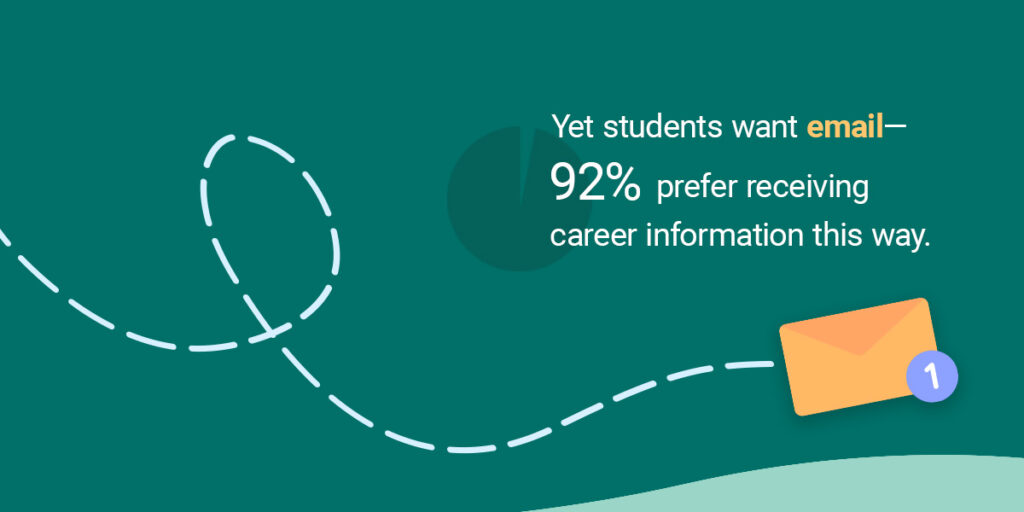
Yet students want email—one poll found that 92% prefer receiving career information this way. The problem isn’t the channel. It’s email fragmentation that makes important messages impossible to find.
Research shows that effective knowledge sharing improves a university’s organizational effectiveness. When communication silos make sharing difficult, your team loses that advantage.
Fragmented communication also leaves colleges in the dark about which emails are resonating. Oakland University experienced this firsthand. Too many communications were sent across the university, many with inconsistent branding. When emails look and sound different from one office to the next, students can start to feel like they’re hearing from several separate institutions instead of one connected university.
Steps for streamlining your higher ed email program
Just like organizing a closet needs a clear plan, so does tackling email chaos. These three steps help you declutter, reorganize, and reset your communication strategy for lasting results.
1. Declutter your current email mess
Before you can reorganize, you’ll need to understand what you’re working with. That means looking at the last 30 to 90 days of emails across departments and reviewing your current email volume, content clarity, and response efficiency. You can also take this opportunity to see how effective your subject lines are and find where teams are sending similar messages to the same people.
Email analytics tools make this review process manageable. Instead of manually tracking every send, you can see performance across your institution, identify what’s working, and pinpoint overlap or underperformance. This visibility stops wasted effort and reduces stress for your teams.
Next, map your student and alumni lifecycle. Create targeted communication that guides readers from prospective interest through lifelong engagement. Align your content with key milestones—inquiry, application, enrollment, graduation, and alumni status. Use first-party data to segment audiences and deliver personalized, relevant messaging at each stage.
Email marketing automation can follow a student’s journey automatically. When a prospective student submits an inquiry form, they begin an automated journey. Instead of manually managing every touch point, the system handles it while you focus on strategy and content quality.
2. Establish clear structure and ownership
Once you’ve identified the chaos, it’s time to reorganize. College communication should balance coordination with departmental flexibility.
- Centralize your strategy: Use one platform for your tools, templates, compliance, and overarching strategy. Departments can still customize content and send schedules to serve their specific audiences. This keeps your brand consistent without stopping local creativity.
- Assign communication ownership: Map your email campaigns to specific journey stages, such as awareness, consideration, conversion, retention, and advocacy. Marketing teams typically own lead acquisition, while enrollment or student success teams manage engagement and retention. This supports consistent, personalized messaging across the funnel without duplication.
- Build your email coordination calendar: Create a shared calendar to schedule campaigns and prevent over-mailing. Include campaign names, send dates, target audiences, subject lines, and content owners. This simple approach maintains consistency and helps everyone see what’s going out and when.
With a clear structure, every email stays consistent, compliant, and effective.
3. Reset your processes and governance for the long haul
To keep email marketing coordinated in the long run, you need the right policies and technology in place.
Start with communication governance policies. Ensure you meet regulations by getting clear consent, identifying the sender clearly, and including required unsubscribe links. These policies protect your institution legally while maintaining high deliverability. Features like template locking and approvals enforce governance automatically.
Next, support your higher education email strategy by standardizing on the right technology. Look for a high-performance email service provider with secure data and automation capabilities that also integrates with your existing systems for real-time email personalization.
The payoff of coordinated email communications
When you organize email marketing across colleges, departments, and lifecycle stages, the results speak for themselves. For example, Texas Christian University now achieves a 60% open rate by integrating email analytics into a dashboard and strategically organizing its approach.
Here’s what coordinated email communications get you:
- Higher engagement and open rates: Coordinated, clear, and focused emails stand out in busy inboxes. When you schedule high-priority messages intentionally throughout the week or month, students actually pay attention.
- Consistent branding and credibility: When every message reflects your institution’s voice and look, students recognize and trust what you send.
- Better targeting and outcomes: Personalized emails that use a student’s name, mention their major, or provide tailored academic alerts drive retention and action. With segmentation, each of the New School’s departments own their lifecycle stage and maintain a centralized strategy—leading to better fundraising, stronger engagement, and more meaningful connections.
- Reduced email fatigue: Centralized planning prevents multiple departments from bombarding the same students at once. By coordinating when emails go out, you make sure important information doesn’t get lost in the noise.
FAQs
Learn more by exploring answers to FAQs about the student life cycle email stage:
What causes email communication silos in higher education?
An email communication silo usually happens when each college, department, or office manages student outreach independently. In these situations, no single team can see the full scope of student communications. Recipients can end up with conflicting or duplicate messages, inconsistent branding, or important information getting lost in inboxes.
Why is email still an effective channel for communicating with students?
Email is direct and personal, which can make students feel supported in a way social media posts can’t always provide. Email is also a great method for encouraging recipients to take action, whether it’s filling out a form or registering for an event.
What is a student lifecycle email strategy?
A student lifecycle email strategy is an intentional, automated plan that delivers targeted communications to students before, during, and after their time at your institution. The emails that are part of your lifecycle strategy will align with various educational milestones, from first inquiry through to graduation and alumni life.
Which student lifecycle stages should higher education email campaigns cover?
Higher education email campaigns should cover every stage of the student lifecycle to maintain continuous and relevant engagement. A strong campaign includes emails with application information, enrollment support, graduation recognition, and alumni updates.
The goal is to foster a lifelong sense of community, even after students have graduated. With strong, consistent messaging, higher education institutions can build meaningful lifelong relationships with their students.
Reclaim your inbox and reconnect with your campus
Emma helps colleges and universities connect with students through compliant, on-brand campaigns that get noticed. Our platform offers simple built-in controls, privacy-first AI, seamless integrations, and smart automation—making personalized communication easy for teams spread out across campus. From recruitment through retention, we help you maintain consistent messaging while giving departments the flexibility they need.
Ready to bring order to your email strategy? Explore how Emma supports higher education teams →