Today’s restaurant marketers find themselves caught in a balancing act. Their leadership teams constantly want to adopt every new technology that becomes available, enamored with the marketing channel du jour. Use email this month. Oh wait, social’s big now. Social reach is dead! Use an app! At the same time, they have operated at razor-thin margins, maintain a strict budget, and prove steady growth. Given the circumstances, how can they possibly do their jobs effectively?
The answer is email. One of the best ways to continually generate ROI when facing evolving technology and consumer preferences is to develop a solid email marketing program. While it isn’t the newest or shiniest option in the market, it integrates remarkably well with other channels, and it’s proven itself to be the workhorse of the hospitality industry. In fact, according to our 2018 Industry Survey, while 60% of restaurant marketers spend 10% or less of their time on email marketing, 42% find it to be their most effective marketing channel, and 30% plan to increase spending this year.
In this guide, we’ll walk through how some of the industry’s largest restaurants and franchisors are tapping into the power of email to differentiate their brand, engage with guests, and increase average spend per customer.
of restaurant marketers spend 10% or less of their time on email marketing.
find it to be their most effective marketing channel.
plan to increase spending this year.
The restaurant industry is notoriously competitive, with new dining options popping up seemingly every day. When trying to win over fickle guests, anything you can do to deliberately differentiate your brand can make a massive impact on revenue, foot traffic, and long-term customer loyalty.
of consumers say personalization plays a role in their purchase decisions.
of people trust online reviews as much as personal recommendations for dining decisions.
Email marketing is easily the most personal channel available to marketers. Unlike broadcast methods, the people you’re reaching have explicitly requested to hear from you by inviting you into their inbox. Respect that relationship by using the data you have about them—from demographic information to behavioral data—to send personalized, relevant messaging.
Reviews on sites like TripAdvisor, Google, Facebook, and Yelp can be a restaurant’s best friend or their worst enemy. One easy way to take back the narrative? Automate emails asking guests for feedback after their visit. Happy guests are less inclined to remember to review their experience, so that little reminder can help propel you back to the top of those crucial pieces of digital real estate.
It’s no secret that over half of your audience will open their email on their mobile device, so it’s imperative that your emails have a clear message and are mobile-responsive. Consider focusing your content down to a single call to action and use a 1 or 2-column email layout to make sure your email looks great on screens of any size.
At its core, email marketing is all about building relationships. If you want to keep guests around for the long haul, it’s crucial that you find ways to connect with them on a personal level that goes beyond the transaction.
Did you know that emotionally-connected customers…
Here are a few ways restaurants can begin to drive that sort of emotional connection through email.
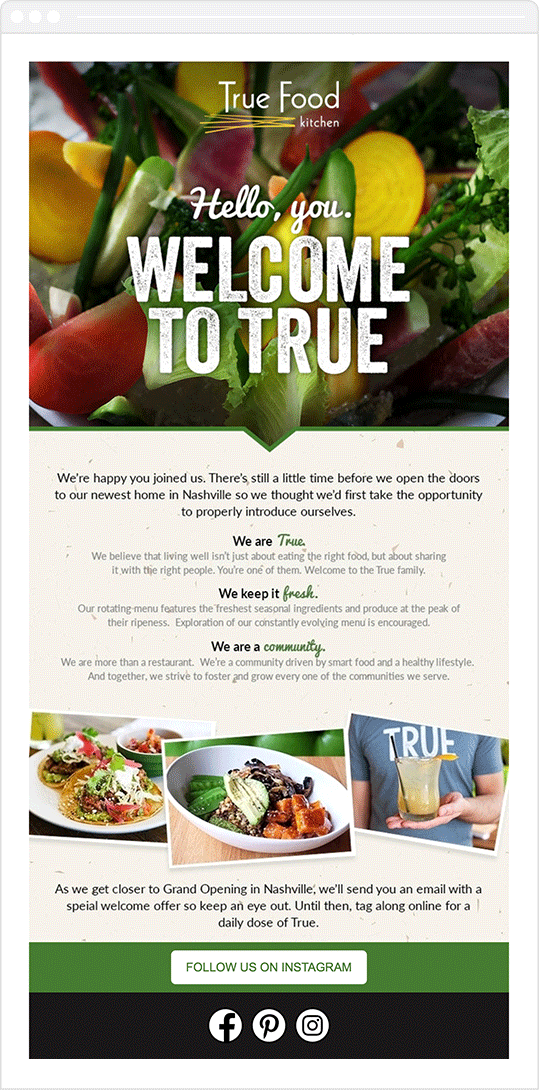
Send a welcome email right away to thank your guests for their visit or sign up. Take this opportunity to tell your brand story, plus tell them what they can expect from you in the future. And remember to encourage them to give you more information that you can use later to customize their experience.
Send valuable content over constant promotions, and use any opportunity to make your guests feel special. A great way to do this? Set up date-based automation workflows to deploy on their birthdays, anniversaries, etc. They’ll be some of the best email-performing emails you ever send: In fact, automated emails average 70.5% higher open rates and 152% higher click rates (Epsilon Email Institute).
Think beyond the first name and send subscribers engaging content they’ll find both interesting and valuable. Put a face to your brand with videos or blog posts highlighting the humans involved in your restaurant and the stories they have to share, whether it’s a CEO, head chef, or mixologist.
Existing customers are one of the largest untapped resources in marketing today. On average, 80% of a business’s revenue comes from 20% of their customer base. So how can you effectively increase the lifetime value of that crucial audience segment?
On average, loyal customers are worth up to 10 times as much as their first purchase (White House Office of Consumer Affairs).
Over 80% of restaurants are turning to technology–like online ordering, reservation and inventory apps, and restaurant analytics–now more than ever to help them run their business successfully and efficiently (National Restaurant Association).
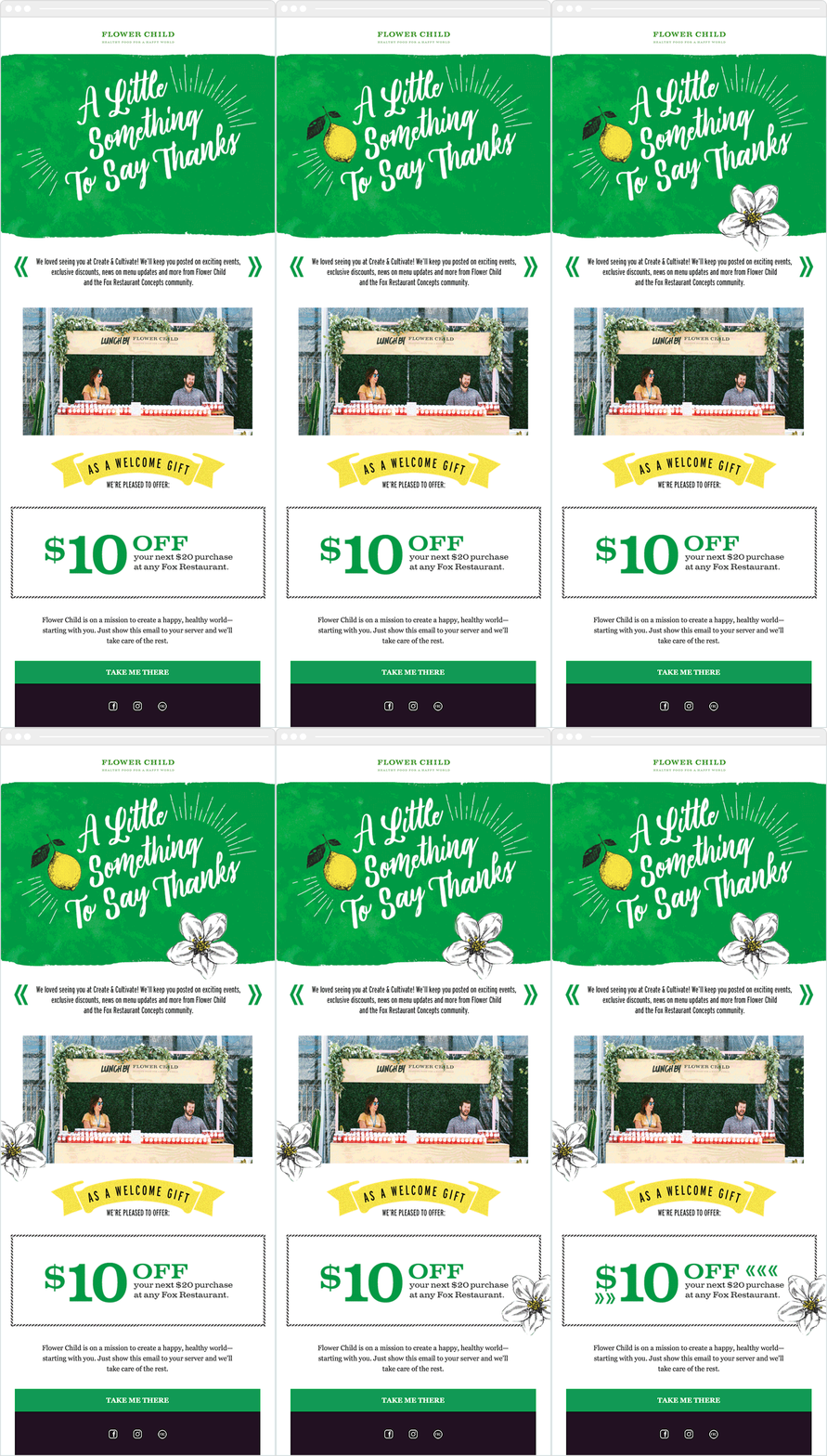
Rather than making a guest seek out your online reservation system, send them some suggested times through email and require just a single click to lock in their spot. The same goes for online orders. The easier it is to do, the more conversions you’ll see over time—especially now that 57% of customers prefer to order their food from a website (Toast Tab).
Instead of asking, “Do you want fries with that?” at the table, use your email campaigns to highlight exclusive or seasonal menu items that’ll up the check. Similarly, offer pairings that will accompany whatever foods they’re typically interested in, whether it’s an appetizer or a particular type of wine.
When you integrate your email platform with a tool like Venga or Marketing Vitals, you can use point-of-sale data to segment your emails and ensure the right subscribers get the right promotions. For instance, segment out only your big spenders for holidays you know you’ll be booked up, or use consumer habits (e.g. gluten-free diners or wine drinkers) to invite people to exclusive, targeted tasting events.
With multiple locations and teams managing marketing for your restaurant, it can be challenging to keep your brand and messaging consistent across the board. Thankfully, you can easily tackle those challenges with the right suite of tools.
of US Millennials expect a consistent experience when dealing with brands online, in-store, or by phone. (SDL)
the average revenue increase attributed to always presenting a brand consistently. (Lucidpress)
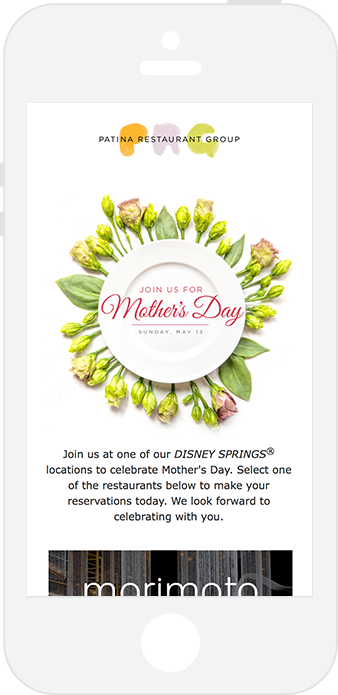
For brands like Patina Restaurant Group, which manages over 60 fine dining locations, control is crucial. Make sure your ESP allows you to set user permissions—including who can and can’t edit certain parts of your campaigns—to preserve brand standards across the board. Bonus points if you can set up an approval process before anyone hits “send.”
Enable end users at every location to send quality, branded emails by sharing content and creative assets from the corporate level, and make sure your email platform is intuitive enough that they’ll be able to use it regardless of technical ability.
While it’s important to dive into the response results for every campaign, it’s also helpful to be able to see how you’re doing across the board. Get visibility at both the global and individual sub-account level to get the most accurate view of your success.
“Thanks to Emma’s intuitive reporting tools, I can quickly see which communications are getting more clicks, make changes, and optimize for the next send.”
Rachel Insler, Director of Marketing at Patina Restaurant Group

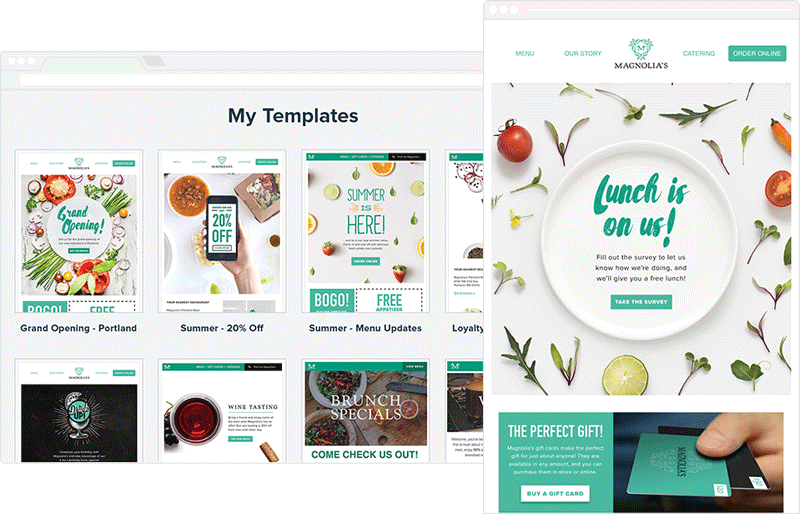
All-in-one platforms in the restaurant space tend to over-promise and under-deliver. Rather than mastering email, they try (and fail) to do everything, leading to a clunky, complicated platform operators aren’t able to fully utilize or understand.
At Emma, we do things differently. With our…
…we have everything you and your operators need to send beautiful email campaigns that drive traffic and increase revenue.
“Choosing to switch to Emma was one of the smartest decisions my team has made. We think of Emma as our partner, not just our email marketing platform.”
Brittney Latney, Senior Digital Marketing Manager at ThinkFoodGroup