

Introduction
The only thing better than school spirit is getting to share it with someone else. It takes a special person to work for a university— someone with passion and empathy and a desire to help students on what some call the best four (or more) years of their life. Many times, you’ve chosen to give back to a university that has helped you along the way, while other times, you may just catch the energy of a nearby institution and want to join its mission with your career path.
And yet, working for a university can be challenging. Considering the pure amount of competition in the space is enough to see why, but taking it a few steps further, you’ll find that universities have millions of touchpoints and interactions with prospective students, current students, and alumni on a daily basis. Pair an ever-growing and changing student population with a faculty lineup that can’t always keep up, and that’s a definite recipe for overwhelm.
University marketing at a glance
When it comes to marketing universities, this responsibility doesn’t fit neatly within a particular person or team’s job description. Regardless of whether or not your school has a dedicated marketing team, this task still falls under the obligation of anyone whose job involves past, present, and future students. But that’s also a hidden advantage of marketing a university—at its core, it’s about relationships and experience. Enrollment is less about a one-time interaction and more about a long decision process and a long-term relationship. Which for us, as marketers (remember, that’s all of us!), means we have to be extremely intentional and strategic and align with the rest of our university’s efforts, which is much easier said than done.
But at the end of the day, university marketing comes down to knowing your target demographic really well. Usually, this can be prospective, current, and/or former students, but it can also be specific segments of the student population, which changes as quickly as fads come and go. Or a particular type of donor, which presents its own challenges. So the number 1 rule of marketing for universities? Pay attention and know your audience.

Why email marketing?
So we’ve covered the unique opportunities and challenges facing today’s university marketers—our next stop is to talk about the best channel for your messaging. We all know that students are a tough demographic to pin down, because they’re everywhere and early adopters of new and exciting technology trends. Among many other reasons.
While it can be extremely beneficial for you to keep up with these new channels as much as you can and social media can be a fun way to show off everything your university has to offer, email remains the best way for all of your departments to communicate with students from admission letter to graduation cap and beyond.
Need proof? Overall, 72% of people prefer to receive promotional content through email, compared to 17% who prefer social media. (MarketingSherpa)
But if we want to focus on the millennial generation of students, we can look to a study performed by SendinBlue, which sought to uncover the likes and dislikes of millennials concerning email marketing. They found that 68% of respondents said they are checking their email at least 2-5 times per day, presenting a major opportunity for universities to get their attention. The same study by SendinBlue found that 71% of millennials will take action from an email that includes their preferred content. (We’ll get to that soon!)
The average social media user has an average of 5.4 accounts (OptInMonster), so you can see how it could be difficult to reach them or guess which account they’re using at a certain time. That’s where email comes in.
Because students have a built-in motive— passing their classes and keeping up with assignments!— to keep up with their university email account, you already know that they’re paying attention to their inboxes and can be reached there.
What to Send
We’ve been over the advantages of email marketing for universities and let’s say you’re all-in. But where do you start? What should you send?
First, you need a strategy. It doesn’t have to be something that’s expansive or overwhelming or takes over your to-do list, but you do need to at least keep these three things in mind before you think about clicking “Send.”

Keep brand consistency across the university. The last thing you want to do is send an email that looks completely different from the communications that students are used to receiving from their school. Every institution has a specific look, feel, and tone to it—how does that translate to your emails?
- What are your school’s colors?
- What about the mascot or logo?
- What brand guidelines have already been established that should exist in email?
- What aspects of your university draw in students, and how can you amplify them using email?
Remember who you’re talking to. Unfortunately, one of the biggest mistakes you can make as a marketer is to send an email for the sake of crossing it off your to-do list, forgetting its recipient is a human, not a computer. Because students have been exposed to many other brands they love and trust, and they’ve grown up with evolving technology around them, they will have high standards for your messaging.
No sweat, we’ve got your back. Consider these questions when crafting your email strategy:
- Are you talking to your subscribers like you would to a student in real life?
- What other brands are popular with your university’s demographic currently and what can you learn from them?
- How can you personalize and curate interesting content students will want to engage with?
Personalization is your strongest tool for making students feel special—use it! The last impression you want to give is that you’re blasting the same message to every student. By including dynamic content, addressing them by name, and sending emails specific to their interests, you’ll solidify your digital and on-campus connections.
Be clear and intentional. Although the stats we discussed above about the advantages of email marketing are true, it doesn’t mean that inbox competition is low. In fact, it’s more than likely that students will receive more emails per day that they can keep up with, so make sure your content is relevant and presents a clear call-to-action.

Inter-departmental marketing
No matter the size of your university, we know that there are a lot of people across many departments who make the day-to-day magic happen. While this can be challenging to create alignment with all team members and their outgoing communications, it can also be a really great opportunity to refine your overall tactics and work together to improve your communications strategy.
At Emma, we most-often hear from marketers in admissions, academics, alumni, and advancement departments, but if your team doesn’t start with an “A,” ( ) we can absolutely still help with your email marketing strategy. Here are some of our go-to tips for these departments.
Email marketing for admissions
Admissions goal: Recruit your best-fit student.
Working in admissions means you always have one thing on your mind—convincing students to enroll in your university. You probably spend your days reviewing applications, talking to prospective students and their parents, and discussing things like SAT scores, academic programs, university housing, and campus life.
Admissions playbook: Showcase your institution without losing your initial connection.
Applying for universities can be exciting, but it can also be extremely overwhelming. Keep in mind that, more likely than not, you aren’t the only school trying to get a student’s attention. Their physical mailboxes and virtual inboxes are probably overflowing with attempts to catch their eye. Of course, you want to do this, too, but you want to do it intentionally.
Show off everything students love about your campus, community, and academics, but make sure you hit the pain points of an incoming freshman, like:
- What will it be like to live on my own for the first time?
- Will I find new friends?
- How do I know which major to choose?
Take every opportunity you can to address the concerns and questions of prospective students and their families, and make them feel heard and understood whenever you can. This is a difficult decision, but it’s an opportunity for your university marketing to make it less stressful. While you probably do this every day, think about how you can translate that same sentiment in an email. This could include sending them an email to tell them about the process ahead and what to expect, or you could spotlight a few students on campus to help them picture themselves there.
And once they’ve made the decision to enroll in your school? Celebrate them as much as possible, provide them with clear information about next steps, and help them get excited about the memories to come.
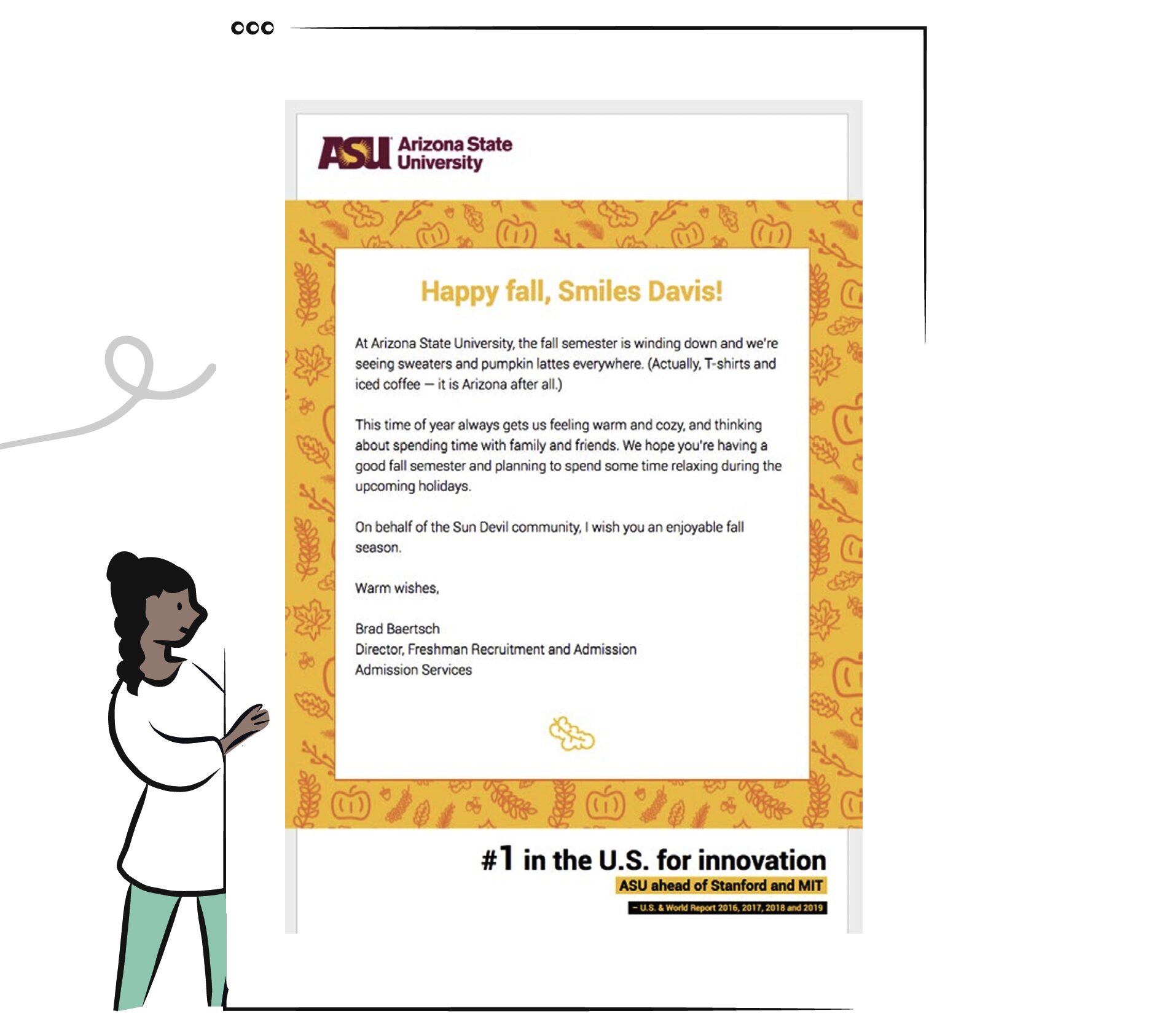
This recruitment email from Arizona State University is personable, warm, and inviting. It paints a picture of student life in the fall without being too pushy about making a decision.
Email marketing for academics and student life
There are a lot of people and university departments that come into contact with students on a day-to-day basis, so this category encompasses more than just academics of campus life. While this also means that there’s a lot of opportunity to follow-up with students in their inbox, not many departments are doing so. This is your chance to raise the bar!
Academics and student life goal: Keep students engaged on campus
This is one of the most fun parts of university marketing, simply because there’s already so much happening on campus already. The opportunities for email marketing are endless, from creating a student life newsletter to featuring on-campus happenings and announcing special events.
Academics and student life playbook: Use email to enhance student experience.
Email might be one of the easiest ways to communicate with all students at once, so make sure you tell them about important things happening on campus, from safety concerns to fun events. You don’t have to completely reinvent the wheel here, just pay attention to what’s already happening and then use email to broadcast it and find more students to get involved. Use these questions to get in your recipients’ heads and show up in their inbox with the answers:
- What’s going on tonight?
- How can I find support for a class I’m struggling in?
- How can I connect with other students like me?
- Who holds leadership positions on campus and how can I get to know them?
The key to doing this is to understand that engagement doesn’t start and stop with your interactions on campus—you can continue the fun digitally! Use email to build-up excitement, raise awareness, and provide important announcements. Then, use it to conduct surveys and send follow-ups for feedback. Getting to know your target audience is always worth it, no matter how much you think you know already.
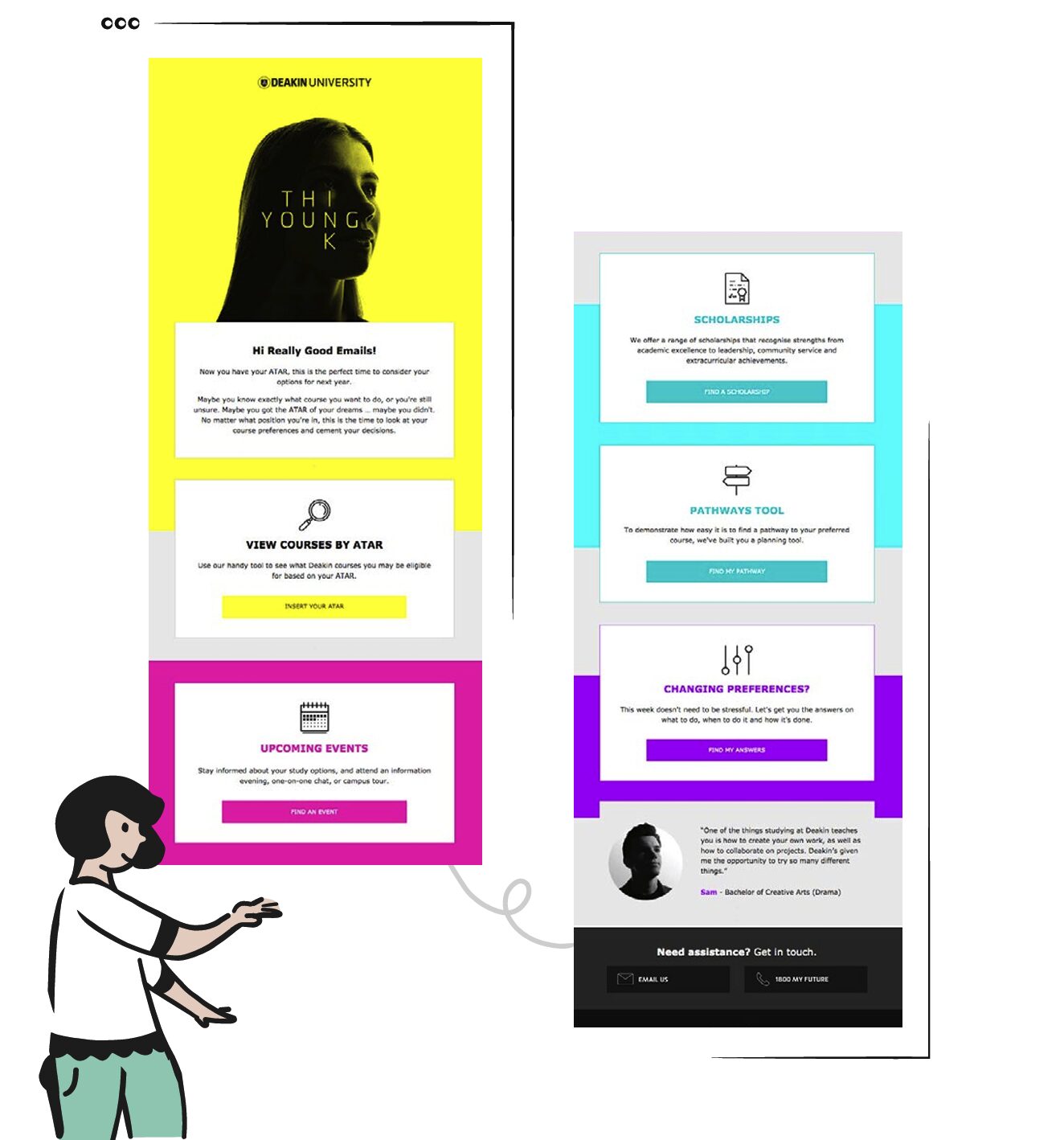
Here’s a creative-yet-intentional email from Deakin University:
Email marketing for alumni
Alumni relations seems like a pretty straightforward term, but it’s a job or department that can mean a lot of different things. At its core, it’s the people responsible for interactions with students after they graduate, and it can include anything from putting on events to sending newsletters and giving them opportunities to remain involved and give back to their alma mater.
Alumni goal: Maintain engagement with the institution.
When a student graduates, there’s also a baton-passing of university departments that reach out to them. While this transition can be obvious and jolting, it doesn’t have to be, especially if you work to align across department marketing teams.
Although students will likely take their first jobs, and maybe move to new cities, email is still the best way to keep in contact with them. (Pro tip: If your university retires student email addresses after a certain amount of time, make sure you give graduates several opportunities to opt-in to your list with alternate email addresses.)
The type of content alumni may be looking for could address these questions:
- I just moved to a new city. Is there anyone here from the same university?
- Are there alumni groups I can join?
- What is my university up to now that I’m gone?
- Can I connect with other alumni to help me in my professional career?
The biggest thing to keep in mind here is that you can remain a constant in an alumnus’ life when everything else is changing. Remind them of the good times and growth they experienced at your university, and help them create connections in their adult lives that are extensions of those memories.
Send them emails about events in their area, let them know what cool things other alumni are up to, and give them opportunities to give back—their money, time, or expertise—to the university. Keep those good feelings alive!
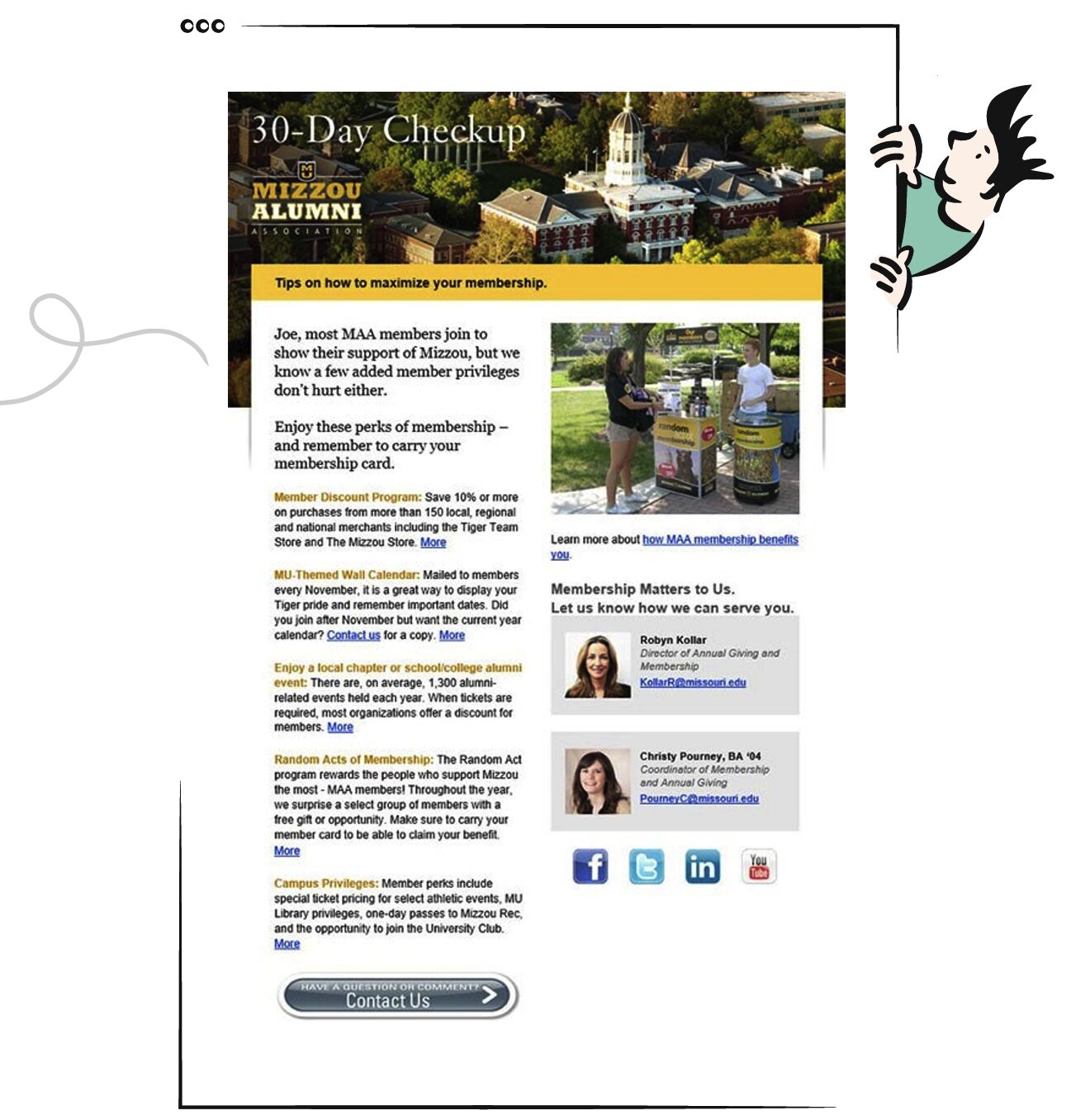
Here’s a great example of this from the University of Missouri:
Email marketing for advancement
In most cases, advancement revolves around fundraising for the university. This can look different, but at its core, the goal is usually the same—to advance the institution and help meet its goals to continue improving life for future students.
Advancement goal: Raise funds and engage constituents.
While this goal may seem a little different than others, it’s very similar at its core because it centers around creating and maintaining relationships. To support the university’s scholarship funds and development of such, the advancement department acts as a type of “educational philanthropy,” working with alumni and parent relations, which means they have a lot of opportunity with email marketing.
Advancement’s fundraising goals are typically aligned with institutional missions, and they also work to engage their constituents, allowing these teams to use email as a strong form of storytelling to donors, helping them feel connected to these values.
Advancement playbook: Storytelling and strong CTAs.
One of the best strategies for an advancement department is storytelling. Using email to communicate stories that remind a former student or their parents of their university experience and see how the institution continues to grow can be a successful tactic that ends with donations. It’s important to create emotional impact, whether it’s excitement, passion, or nostalgia, to inspire action.
Before clicking “Send,” make sure your emails are answering the following questions:
- How can I give back to a university that gave me so much?
- How can I be a part of a university’s legacy?
- How can I support my local community through university donations?
Another strong focus in these emails needs to be the call-to-action. Don’t beat around the bush here, make your case strong and then ask for donations. Use buttons that are easy-to-find, easy-to-understand, and easy-to-click.
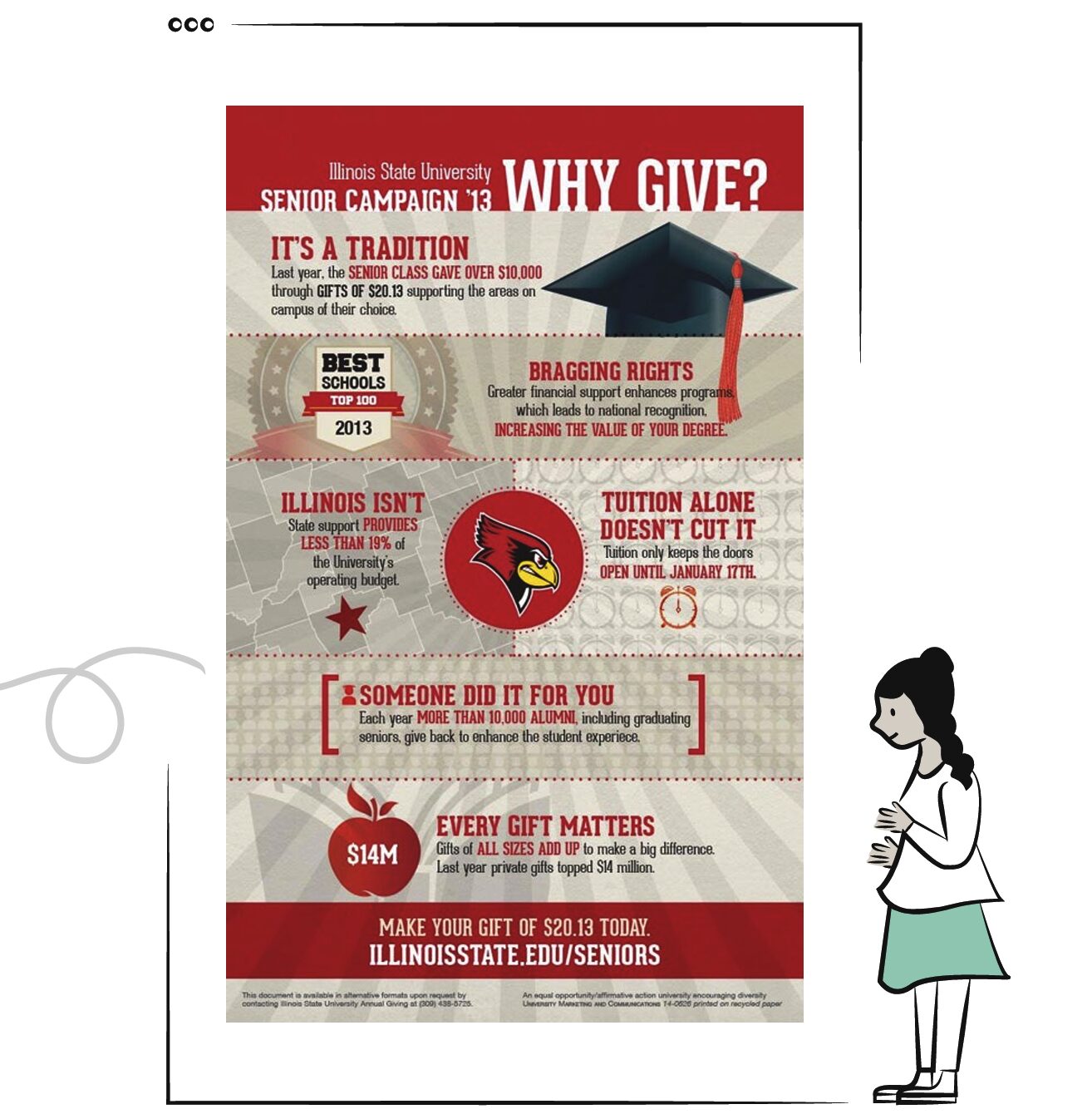
Look to this example from Illinois State University:

Department Playbook: Emma HQ for universities
We’ve covered a lot of ground here, and we can’t wait to see the incredible emails you send to prospective students, current students, alumni, and donors. But first, we want to let you know about a little something we like to call Emma HQ.
At Emma, we’ve talked to thousands of universities (in fact, more than 500 universities worldwide use us for email marketing!), to help understand their unique concerns and partner with them to create solutions.
Here are some of the pain points we’ve worked hard to address:
| Your problem: “We need a way to keep brand consistency across departments. Admissions may be sending emails that look completely different from those going out from alumni relations.” | Our solution: Done and done. With Emma HQ, you can easily share templates, set and lock brand colors, fonts, and more, making it easy to keep brand consistency across all communications being sent. Your departments will be empowered to send and grow, and you’ll never find an old logo in your emails again. |
| Your problem: “We want to see all of the communications going out in a given day, week, or month.” | Our solution: Here’s visibility into your entire email program. See what’s happening across all subaccounts and drill into individual sends with ease. The at-a-glance view of recent activity and results helps you identify which teams are nailing it (and which ones could use a little help). |
| Your problem: “I’m a marketing manager who wants to review and approve an email before it goes out.” | Our solution: We hear you! With Emma HQ, you can approve every send, from any department. Before each email is sent, it’s delivered directly to the approvals dashboard so you can quickly review the content, comment to suggest changes, and quickly approve or deny the mailing. |
| Your problem: “I wish an expert could help with my email strategy.” | Our solution: Meet our Professional Services team. They can provide strategic advice, compelling content, and design custom email templates for your brand. Plus, our deliverability experts will ensure you’re maximizing the number of emails that land in the inbox. |
| Your problem: “I feel like this is too good to be true.” | Our solution: Nope, it’s just email marketing that works for you. Pull up a chair. |

See why more than 500 universities worldwide trust Emma.
