
Introduction
Some say you never forget your first love. At Emma, we say you never forget your first email campaign.
Do you remember yours? How much time you put into crafting just the right words and making sure the design looked beautiful? How you double and triplechecked every detail to make sure everything was just right (and you didn’t mess something up)? The sweaty-palmed nervousness of hitting “send” for the very first time knowing that hundreds or even thousands of people would be receiving it?
Email marketing is exciting, and it works. You experiment, learn, and grow your subscriber list every day.
But here’s the thing: there are sexy new channels always popping up that demand your attention, some even proclaiming that “email is dead.” It’s all too easy to go on autopilot and send the same old content in the same old template week after week while you focus on other things. Email can become something you take for granted, or even worse, neglect altogether.
Guess who doesn’t take email for granted? Your customers.
The same old love song (remixed)
It’s true that email, at its core, hasn’t changed much over the years. Its content still comprises copy and imagery. Its success still depends on subscribers.
But here’s the key: Email, as a marketing tactic, still works. It works so well, in fact, that we might suggest email is a marketer’s ONLY digital must-do.
Let us explain.
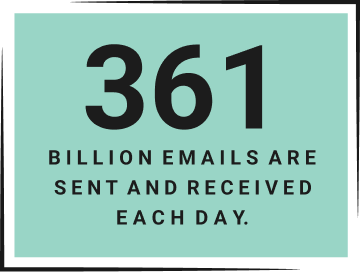
Research shows that email isn’t dead. In fact, it’s more alive than ever. A study done by The Radicato Group showed that in 2024, over 361 billion emails were sent per day, a number that’s expected to climb to 424 billion in 2028.
When you think about it, email is essentially a requirement in daily life. Schools and employers assign email addresses. Everything from smartphones to home utilities to shopping, entertainment, and social channels all require an email address to sign up, manage your account, and use their services.
This modern pervasiveness of email means there’s a lot of work surrounding it.
A recent survey of more than 200 marketing professionals—to find out their present challenges, concerns, and priorities— revealed conclusive results. We’re all overwhelmed.
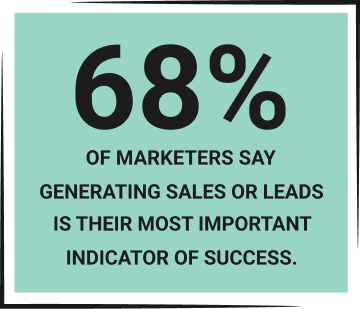
We understand that it can be hard to juggle internal expectations alongside customer relationships, and our study showed that marketers don’t always know what to prioritize. In fact, when we asked about their measures of success, 68% say generating sales or leads is their most important indicator of success, versus just 42% who said fostering engagement is the most important.
Contrast our workload, however, with what our customers want from us. One study found that 54% of consumers prefer to hear 1-2 times per week from companies, so how can we possibly keep up?

With limited resources and growing consumer demand, it’s critical that we prioritize the one tactic that is efficient, trackable, and plays remarkably well with all of the other channels at our disposal.
But don’t just take our word for it. We partnered with marketing expert and author Jay Baer to get his take on why (and how) marketers should tie their email strategy to different digital tactics.
Jay Baer
Email communication is the key to a strong relationship.
I’m delighted to work with Emma and the survey results they found were impressive, yet not terribly surprising. As I read through the data and thought about the ongoing epidemic of overwhelmed marketers, I realized how email is the core to all customer relationships. Think about it, to successfully communicate to prospects about your business’s products or services, your marketing must first get to those individuals in some way.
Stick with me here…
Over the past few years, new digital platforms have opened fresh opportunities to expand reach.
Reach = # of people who are exposed to your message.
In the “pursuit of the shiny,” email has frequently been relegated to a “set it and forget it” role partially because it was a known platform and, in many cases, did not require much effort to keep it running. However, it’s a mistake to let the power of email fade into the background of your marketing efforts.

To be sure, native ads, display ads, content marketing, and social media are also viable methods of extending messaging to your digital audience. Marketers commit considerable budgets to writing blog posts, publishing on social media, and buying banner ads in the hopes of getting new eyeballs on their brand.
The problem is that these tactics can provide reach, but not reliable reach. That distinction belongs to tried-and-true email marketing.
Assuming the address is legitimate and mail servers are functioning, the fact is that if you send your customers an email, they will receive it. They may not open it. They may not click on it. But it will reach them. This is a feature of email that cannot be matched by any other platform (we may extend messaging apps a possible exception).
We know that email works, and marketers confirm it.
In EntrepreneursHQ.com’s recent study on email marketing, they reported that 88% of email users check their inboxes multiple times a day. Furthermore, 60% of people were found to prefer email over social media for brand communication. And the marketers surveyed indicated that they see an average ROI of $36 for every $1 spent on email marketing.
88%
OF EMAIL USERS CHECK THEIR INBOXES MULTIPLE TIMES A DAY
60%
OF PEOPLE WERE FOUND TO PREFER EMAIL OVER SOCIAL MEDIA
ROI OF $36 FOR EVERY $1
SPENT ON EMAIL MARKETING.
Actions speak louder than words.
Simply having your prospects see your content isn’t enough. Even those marketing darlings of Likes, Retweets, and Views are just vanity metrics that don’t necessarily translate to valid customers or sales. Ultimately, prospects must act on your content for marketing to be successful. But it’s a rare piece of collateral that is so creative, inspiring, or noteworthy that it generates immediate action on its first attempt.
Marketers too often seem to disregard the savviness of today’s consumers. Customers have competitive options and do their research. They poll their inner circles for recommendations or caveats. And they certainly don’t appreciate a hard-sell.
What your audience needs from you is genuine relationship building.
Most consumer purchases need time to come to fruition, and neither a potential customer nor an existing one deserves to be pressured by an overzealous company leaning on them like a teen on a first date. Pushing harder and hoping that content marketing or social media will somehow yield an instant sale is unrealistic, and quite honestly, a major turn-off.
A comprehensive email strategy, on the other hand, can initiate a client-brand relationship and nurture it along the way—provided you’re offering value (i.e., usefulness) at every interaction.
What construes “value” varies across customer segments and changes over time as your audience progresses through the sales funnel. Determining the value propositions at each step is a considerable challenge for many marketers but it’s necessary.
Building that long-term trust means balancing the give and take. At Emma, they say that marketing is 30% sales and 70% customer service. If you sell something, you make a customer today, but if you help someone, you make a customer for life. I could not agree more.
In fact, EntrepreneursHQ.com’s study (cited earlier) found that sending at least one email per week increases engagement by 3x. The importance of delivering consistent, reliable, and valuable content is paramount when promoting your brand.
3X
ENGAGEMENT BY SENDING AT LEAST ONE EMAIL PER WEEK
The more a business can provide useful information and relevant offers, the more successful it will be in strengthening the client-brand relationship.
TEXAS CHRISTIAN UNIVERSITY NOW HAS A
68%
AVERAGE OPEN RATE.
Emma found this worked when they helped Texas Christian University (TCU) create a smarter email program.
With Emma’s guidance, TCU’s marketers realized that providing valuable, relevant content on a consistent basis was the key to keeping students engaged and connected. On top of that, Emma’s easy-to-use templates helped TCU achieve brand consistency, which went a long way in strengthening their relationship with their audience. Since TCU started using Emma, they’ve been consistently achieving a 60% average open rate, far higher than the industry standard.

Using email with other digital tactics
Email has a major advantage in that it can greatly support other marketing efforts by providing direct insight into customer behavior. Knowing which emails consumers open, what content they click on, which devices they are reading from and at what times of day are all highly useful information points that can be collected and incorporated.

Salesforce confirms that combining email with other marketing channels can deliver better personalization and customer experience, with the three biggest benefits cited as improved awareness, higher rates of customer engagement, and improved customer acquisition.

Content Marketing + Email:
I’ve said it before, and I’ll say it again, to gain audience trust, it’s imperative that companies be willing to take the first step in the relationship by extending the gift of quality content.
I define this as “Youtility”—massively useful information, provided for free, that creates long-term trust and kinship between your company and your customers. (I wrote an entire book about it!) I even believe that most of your content should be openly accessible at the top of funnel and gated only as your prospects move nearer to the close.
Search + Email:
Search Engine Optimization (SEO) is an important tool in a marketer’s toolkit because it provides directly relevant results to individuals who are looking for your content.
Take advantage of this direct connection by providing a solid useful asset on your search landing pages, but then offering an even sweeter asset in exchange for email.

One internationally-recognized Emma client had a strong SEO presence in a competitive industry but wanted to grow their email subscriber list. To entice their audience, they updated their standard newsletter form and invited visitors to sample their products. Email subscribers receive insider-first updates on swag, recipes, and events, as well as a printable pledge certifying commitment to the brand’s peoplefocused missions. By involving their customers in a do-good community, this client increased their email list by 26,000 subscribers with an average open rate of 64%.
Social + Email:

As with search, you should collect email addresses with great landing page content, but also use lead gen ads to collect email addresses directly in social ad units. For example, you can send ads to users who’ve sent your Facebook or LinkedIn pages a message in the last 30, 90, or even 365 days.
Your social audience may not be online long enough at the time to consume all the content they are actually interested in, so collect their email addresses, follow-up, and send them the content they want to read later.
Video + Email:

Multi-part video content is a perfect way to introduce useful content to your audience while still bringing them further into your sales funnel. You can do this by sharing an initial video that informs viewers and whets their appetite for more, and then gating the subsequent videos behind an email collection form.
One of my favorite examples is Vidyard’s Video Marketing Institute series which nicely shows this approach in action; visitors can openly view the Lesson 1 video and supplemental PDF guide but Lessons 2–7 can only be accessed by signing up for further correspondence from Vidyard.
Display + Email:
As with search, display ads are a powerful way to make direct connections between interested consumers and product or service providers.
Being strategic in what you promote via display ads can help you gain highly qualified leads; you can collect email addresses in exchange for providing great content and begin to usher your prospects along the conversion path. Use email to segment the audience by taking them to different pages on your site, then create social media retargeting ad groups to nurture the relationship.
Bam! Talk about powerful!
Web + Email:
As marketers, we love data, and adding forms of all shapes and sizes on the company website is certainly one way to gather intel. Whether it’s a product locator, software trial, white paper download, or standard email newsletter sign-up, website forms should share a common trait: they should be transparent.

I don’t mean “transparent” as in see-through, of course (although some rather interesting effects are possible with a talented web developer). I mean transparent, as in intentional.
When asking visitors to supply information via forms on your site, you will get far better success if you clearly explain exactly what people will be getting, how often, and why, and make your resulting email follow-ups match those expectations.
However, because every extra form field reduces response rate, ask only for what you absolutely need right now at this point in the sales cycle.
Landing page expert and my friend, Tim Ash of SiteTuners puts it simply, “Don’t be greedy.”
“Don’t be greedy.”
He cautions that when marketers ask for too much information, too early in the process, customers realize that the amount of information required versus the value of the content is not proportional— and then the lead is lost.
No one is a mind reader.
Successful email marketing means successful relationship building, and as much as we like to think we understand our customers, marketers need to be honest that none of us are mind readers.
Yet, as in any good partnership, we as marketers have the opportunity—and the responsibility—to get to know our audience better.
If you’re in the 99.9% of companies that has the potential for repeat business (and I hope you are!), you need to be opting prospects and customers into your email program because it’s the best way to drive ongoing engagement and strengthen the relationship.
Maximize your information gathering and build your consumer relationship trust through testing, adaptation, and acknowledgment.
Content
Testing email subject lines is a perfect start to discovering what piques your customers’ initial interest. Track which images, wording, and link placements garner the most engagement. Make your calls-to-action (CTAs) simple and easy to see.
Email is also a searchable content asset. When was the last time you searched your inbox for a brand, an offer, or for information? Make sure your content is there as your customers and prospects are searching, too.
Optimize all content for mobile and ensure your email matches your website and other channel branding. I love how Emma helped Oakland University create a new custom template that matched the look and feel of their website and helped them achieve a better brand consistency across channels. All of the templates have been built to make it simple for each of the more than 2,000 users across departments to drag-and-drop its details into a template while keeping all of the university’s branding—colors, fonts, font sizes—locked. This gives individuals in each department the autonomy to create emails on their own time while strengthening the Oakland University brand.
Timing
We live in a 24-hour digital world and while most of us do not work 24/7, your audience can access your content any time that is convenient for them. The trick is to get the right email at the right time to the right people.
Look, this is pretty easy: review your email analytics to see if certain times of day or days of the week perform better for different audience segments, or if your audience would benefit from appropriately spaced reminders, and schedule your sends accordingly.
The YMCA of the Triangle in North Carolina planned a series of four automated emails over four months to help new members keep on track with health goals.
YMCA of the Triangle’s welcome series averages a 50% open rate.
It’s helpful, timely, and fosters a sense of community for new members. The average open rate for the entire series is nearly 50%, a significantly higher rate than their standard branch mailings typically receive.
Recognition
If your business has an engaged social media presence, take advantage of it. Social media is great way to test creative and messaging, and it can be an untapped source of potential new email content.

Did one of your Pinterest pins drive a high volume of click-throughs to your site? Share it in your email!

Did one of your Instagram photos garner an exceptional number of engagements? Share it in your email!

Did one of your Facebook customers give you a wonderful review or testimonial? Share it in your email!
If a particular piece of social media content performs particularly well organically, it’s a good candidate for your email marketing. By including successful social content in your emails and driving readers back to those original sources, you are likely to get even more social engagement…which in turn affects social algorithms and increases additional reach.
The future of your email relationship
Healthy relationships, both offline and on, are built on time, trust, and good communication skills. Your email relationship with your customers right now may be solid, but there’s always room for improvement.
After all, being a faithful partner with your customers should be your ultimate relationship goal.
Ready to jumpstart your email marketing strategy?
Emma has all the tools you need to master email marketing, making it easier than ever for your team to drive conversions and revenue with email. And, unlike other email providers, Emma puts their customers first. Our award-winning team is always ready to support you on your email marketing strategy, design, list migration, and more. After all, it’s email marketing that works for you.
